
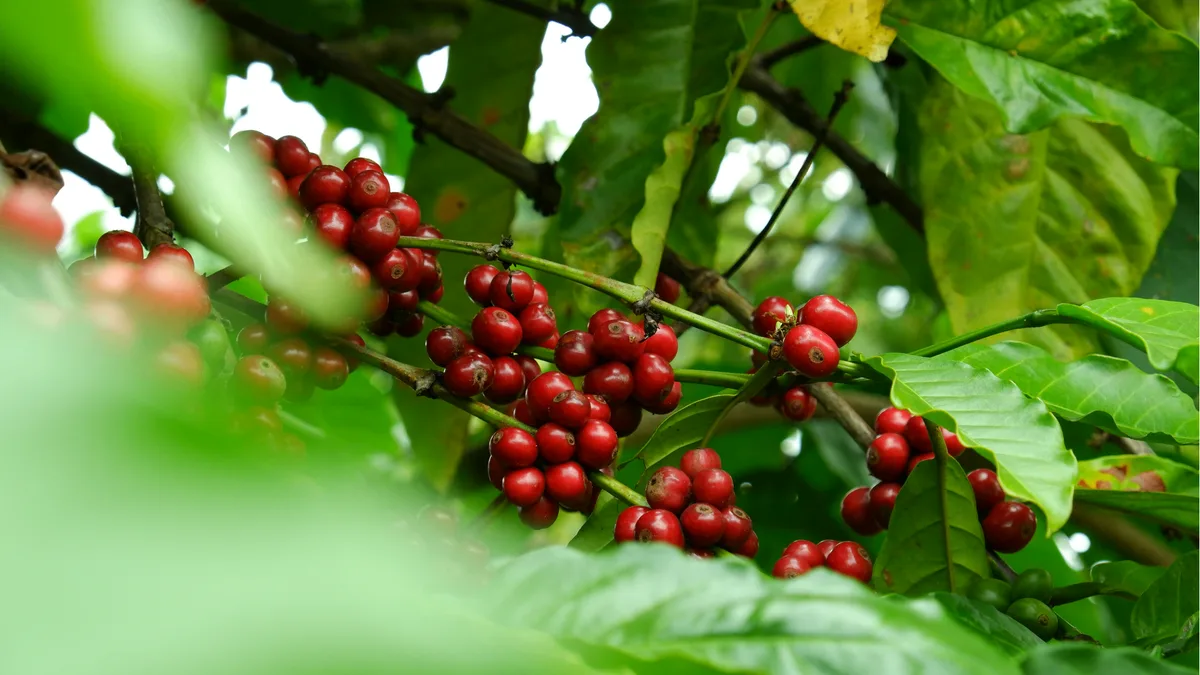
Robusta vs Arabica - caffeine, taste, acidity and price compared. Here's why Vietnamese coffee leans Robusta and when it's the better bean.
The short version: Arabica is smoother, more acidic and more aromatic, while Robusta is bolder, less acidic and has nearly twice the caffeine. Arabica dominates European specialty coffee; Robusta is the backbone of Vietnamese coffee. Neither is "better" - they're built for different cups. Here's how they actually compare, and why we chose Robusta.
The two beans, side by side
Almost all the coffee you drink is one of two species: Coffea arabica or Coffea canephora (Robusta). They grow differently, taste differently, and have been marketed very differently.
| Arabica | Robusta | |
|---|---|---|
| Caffeine | Lower (~1.2%) | Higher (~2.2%) |
| Acidity | Higher, brighter | Lower, rounder |
| Flavour | Floral, fruity, sweet | Bold, chocolatey, nutty, earthy |
| Body | Lighter to medium | Heavier, fuller |
| Crema (espresso) | Thinner | Thick, lasting |
| Grows at | High altitude | Lower altitude, hardier |
| Typical price | Higher | Lower |
Why Arabica got the "premium" reputation
For decades, European specialty coffee built its identity around Arabica's delicate, wine-like notes, and Robusta got used mostly as cheap filler in mass-market blends. So "Robusta" came to mean "low quality" in a lot of people's minds - not because the bean is bad, but because the cheap stuff was usually Robusta.
That's a reputation problem, not a flavour verdict. High-quality, single-origin Robusta, roasted well, is a completely different experience from the bitter dust in a supermarket value tin.
Why Vietnamese coffee leans Robusta
Vietnam is the world's largest Robusta producer, and Vietnamese coffee culture was built around what Robusta does best: a thick, intense, low-acid cup that stands up to a metal phin filter, plenty of ice, and a generous layer of sweetened condensed milk. Put delicate Arabica through that and it largely disappears. Robusta holds its ground - that's the entire reason cà phê sữa đá tastes the way it does.
What we chose, and why
Our coffee is 100% single-origin Robusta from Pleiku, roasted in Đà Lạt. We didn't pick it to save money - we picked it because it's the right bean for the coffee we're making. Roasted with care, it gives us deep dark-chocolate and roasted-nut notes, a full body, and that satisfying bittersweet punch, without the heavy, buttery finish some large producers add in roasting. We'd rather let good Robusta speak for itself.
So if you've been told Robusta is the lesser bean, this is your invitation to taste it done properly.
Want the bigger picture first? Read What is Vietnamese coffee?. Ready to brew? Here's How to brew Vietnamese coffee with a phin - and our No Regrets Horse kit has everything you need.
FAQ
Is Robusta worse than Arabica?+
Does Robusta have more caffeine than Arabica?+
Why is Vietnamese coffee made with Robusta?+
Which is better for espresso?+

Co-founder, TRAN Coffee Lab
Cecilia is the older sister and co-founder who keeps TRAN Coffee Lab running. From the legal paperwork to the accounting, the website, and the logistics - she builds the systems behind the scenes so every bag of coffee makes it to your door on time.